
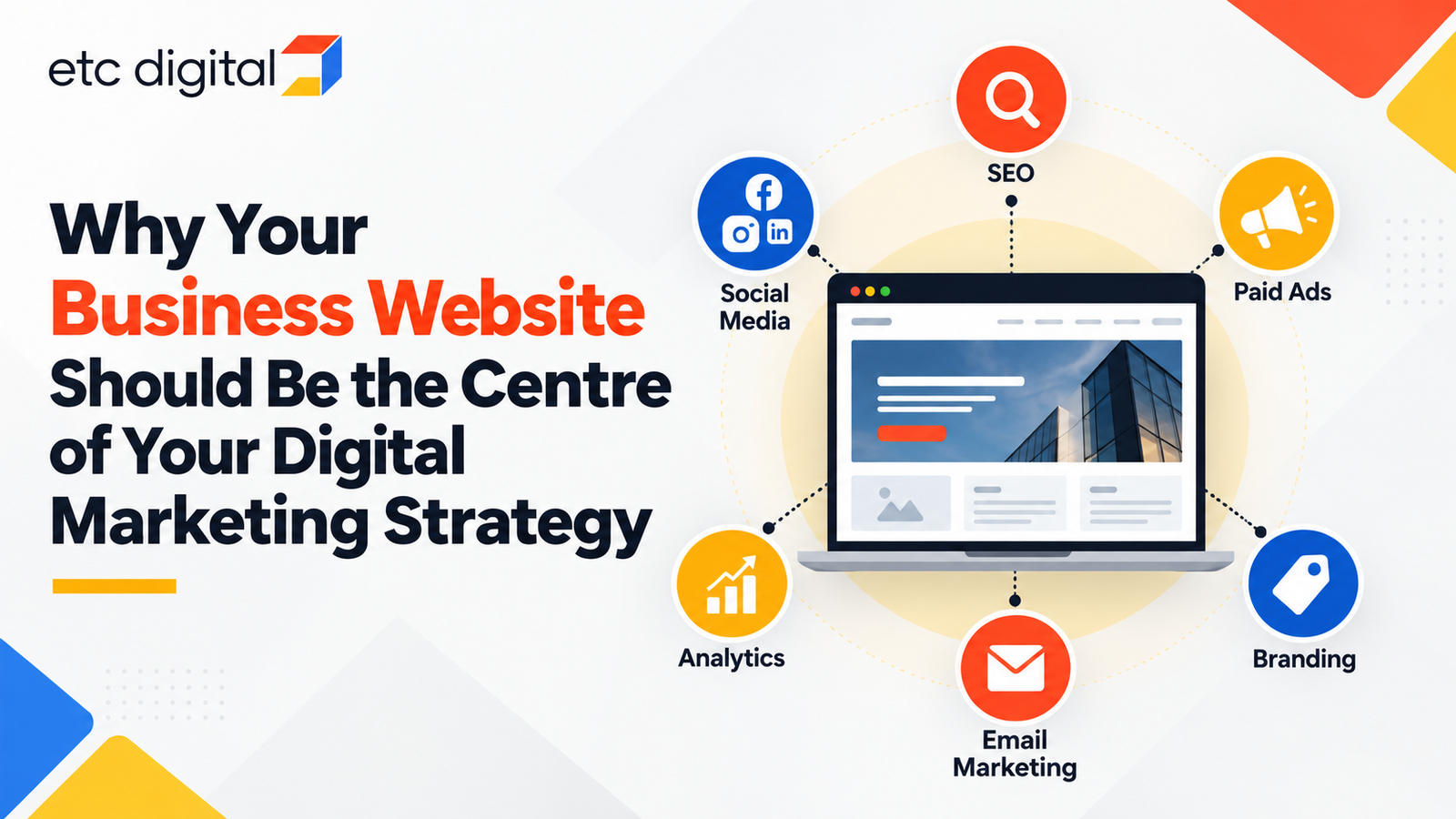
A brand can actively post on media, run search ads, write blogs and send emails. These activities need a place where visitors can learn, compare, ask questions and buy. For businesses, that spot is the business website. The business website gathers products, services, proof and paths to conversion. It strengthens the online business presence.
A website digital marketing strategy looks at the business website as part of the marketing system, not as a one‑time design job. A separate digital marketing strategy can then show how each channel helps that central asset. Google’s Search Central guidance stresses people‑first content and solid technical foundations.
1. Give Every Channel a Clear Destination
People rarely move from learning about a brand to buying in a single step. Someone might find a brand on Instagram, search on Google, click an ad and then visit the business website before making contact. The business website gives these touchpoints a shared destination. The business website should make that destination easy to navigate.
Social media can create awareness, search can capture demand, and email can bring people back. Advertising can reach specific audiences. The business website connects these activities through service pages and landing pages. This makes a website’s digital marketing strategy more structured, with each channel given a role in the marketing funnel.
2. Turn Visits Into Leads and Sales
Getting visitors is one part of marketing. The business website must also make the next step obvious. A lead generation website for businesses can guide visitors toward enquiries, calls, bookings or purchases. A conversion-focused website removes friction. It helps users know what to do next.
Website conversion optimization matters here. If you are looking for an agency that will make your brand the centre of your social media strategy, then ETC Digital is the right choice. ETC Digital’s conversion work includes UI/UX improvements, A/B testing, funnel improvements, event tracking, heatmaps and session monitoring. These methods help teams spot user friction.
A website digital marketing strategy should start with business goals. The business website marketing strategy should define the desired action and the information needed.
3. Build SEO Into the Website Foundation
Search visibility depends on more than adding keywords to pages. Google points businesses toward requirements, crawlability, useful content and search‑friendly structures.
This makes business website development a marketing consideration, not a technical task. Developers need to think about structure, mobile usability, speed, security and accessibility. These factors shape the business website user experience.
SEO and website optimization should continue after launch. Search Console shows how pages appear in Google Search, while analytics tools reveal visitor behaviour. Tracking business website traffic can show which pages attract attention and which campaigns bring visits.
A digital marketing strategy uses these insights to improve the site. A business website’s digital marketing strategy should use this data to guide improvements.
4. Make Content Work Harder
Content should answer questions, explain services, show expertise or help prospects make informed decisions. A content marketing strategy can organise topics around the customer journey from research to product comparison and purchase.
The business website gives content a home. A useful guide can be shared through social media marketing integration or linked from an email. This creates an integrated digital marketing strategy.
Google recommends helpful, reliable, people‑first content. The business can then use its digital marketing channels to distribute that content to relevant audiences.
5. Connect Paid Campaigns to the Right Pages
Paid advertising campaigns can create opportunities, but the destination matters. Sending every advertisement to the business website homepage forces users to search for promised information. A dedicated landing page can continue the ad message and present one action.
For example, an ad for a website audit can lead to a page explaining the service and providing an enquiry form.
ETC Digital’s offering includes performance‑focused campaigns while its web services support SEO‑friendly and conversion‑oriented business websites.
6. Keep Email Connected to the Website
An email marketing strategy should lead somewhere useful. A newsletter can direct readers to a guide, while a product email can lead to a product page. A follow‑up sequence can direct a prospect to a case study or consultation page.
The business website can capture sign‑ups, downloads and enquiries, creating a digital customer experience beyond a campaign.
7. Create One Consistent Brand Experience
People may encounter a company through platforms. A consistent online brand presence helps them recognise each interaction as part of the business. Tone, visuals, messaging and calls to action should work together across the business website, ads, social profiles and email.
Each channel can serve a purpose. The website gives depth. Social media encourages interaction. Search captures intent. Email nurtures interest. Together, these activities support digital marketing for website goals and performance.
8. Use Data to Improve Decisions
A website as a marketing tool can give user data. Website analytics can show landing pages, traffic sources, events and places where visitors leave. This data can show which pages need stronger calls to action or easier navigation. Website performance optimization for the business should happen continuously. Teams can check speed, engagement, form completion and campaign results, then test improvements. This changes the site from a brochure into a measurable marketing asset.
9. Make the Website Support Long-Term Growth
The website should grow with the business. New services may need landing pages, new content or campaign pages. Analytics may show where the buying process needs improvement. That is why a website digital marketing strategy should be reviewed as campaigns, audiences and priorities change. It creates a structure for other activities. A website digital marketing strategy can also help business growth online by making marketing efforts easier to connect, measure and refine.
Why ETC Digital?
ETC Digital combines website and digital marketing services. ETC Digital helps businesses build and promote their presence. It offers website design, development, SEO, performance marketing, content and conversion work. This lets the website and its marketing activity be planned as parts of the same system.
For businesses investing in channels, the website should help with discovery, trust, leads and sales. That needs structure, useful content, calls to action and measurement. This is the role of digital marketing strategy for website planning and website development.
If your current site attracts visitors but does not turn enough of them into enquiries or customers, ETC Digital can help find gaps. A digital marketing strategy can link those gaps to goals. ETC Digital services bring acquisition and website experience together, from SEO and design to performance marketing and conversion work.
A website digital marketing strategy works best when the website is the point where marketing efforts meet. You can also have a website as a marketing tool when content, user experience and measurement are planned around goals. With the right structure, the website can do more than represent your brand. The website can actively support your business strategy. Turn online attention into measurable action through an actionable marketing funnel.