The first real interaction many customers have with a business is through the website. It could be eye-catching, but looks aren't everything. The site must load quickly, work smoothly and help visitors find what they need. That's where Website Design and SEO meet.
Good design needs to be user-friendly and search engine friendly. Awareness of the significance of Website Design in SEO can assist businesses in creating websites that drive traffic, gain trust and convert visitors to action.
The Connection Between Website Design and SEO
Search engines need to provide useful and accessible pages to their users. Even if a site looks good, it can still have problems if it takes a long time to load, if people can't find what they want or if it doesn't function well on their mobile devices.
It all starts with structure regarding Website Design and its role in SEO. Clear menus, logical categories of the pages and meaningful internal links assist visitors in navigating the site. They also assist search engines in comprehending the relationship among different pages.
An SEO Friendly Website Design takes these requirements into account when designing these websites. It doesn't consider optimisation as an afterthought when the site is finished.
Good Web Design for SEO provides a solid technical and graphical base. Content, code, navigation and page layout don't compete with each other.
Website Speed Shapes the First Impression
Users don't have much time to wait for a website to load. Many visitors will abandon a website if it doesn't load quickly enough, before reading a single word. Excessive images, animations, scripts and bad hosting can all impact performance.
Google states that half of all mobile visitors expect a page to load in 3 seconds or less, or they will likely depart. This figure illustrates the loss of attention, engagement and revenue of a slow website. The numbers above are taken directly from Google AdSense Help.
The speed is thus crucial for both User Experience and SEO. A faster website is smoother and less frustrating. It can also aid in better engagement by helping visitors to access information without too much waiting.
Mobile Responsiveness Is Essential
A website might appear great on a desktop computer; however, it can be difficult to use on a cell phone. The text might be too small, buttons may overlap and menus may not function correctly. Trust is easily lost with these problems.
Responsive website design is a website that adapts its layout to the various screen resolutions. It ensures that headings remain readable, forms are easy to complete and buttons can be tapped without difficulty.
An SEO Friendly Website Design that's done right will provide a coherent experience on smartphones, tablets and desktop devices.
Navigation Helps Users and Search Engines
Visitors need to know their location and their next destination. They may leave if they don't know how to find what they're looking for in the business, even if they want exactly what the business has to offer.
Menus are clear, labels describe what the product is and breadcrumbs and internal links enhance the UX design. They lead the user from general information to a specific service, product or contact page.
Another very crucial aspect of Website Design for SEO is navigation. Links serve as a way for search engines to find content and to understand a website's structure. Pages that are important should not be several clicks deep from the home page.
Visual Hierarchy Guides Visitor Attention
Each page must be the focus of one idea. A visitor could need to read more about a service, do some research and find a comparison, complete a purchase, or they may need to submit an enquiry. That journey should be natural and the design should lead the way.
Visual hierarchy is achieved through headings, images, spacing and positioning of buttons. The most significant message should be at the top. Supporting details may be in order or sequence.
An effective conversion-focused web design strategically places calls to action where they are most useful. Does not push visitors with a button at the end of every sentence.
Technical Structure Supports Search Visibility
The visual interface is only one part of a website. Search performance also depends on what happens behind the scenes.
Help search engines understand a page by making sure it is clean HTML, has proper heading tags used and has descriptive image alternative text and crawlable links. A secure HTTPS connection, accurate redirects and an organized URL structure are also important.
This is why Website Development and SEO should be planned together. Designers, developers, content writers and optimisation professionals need a shared understanding of the site’s goals.
Strong Website Design and SEO decisions can prevent technical problems before launch. Fixing poor architecture later may require more time, money and effort.
Content Must Match Search Intent
A beautiful page will not rank or convert well if it fails to answer the visitor’s question. Design should make useful information easy to locate.
Service pages need clear explanations. Product pages need accurate details. Blog posts need well-organised information that genuinely helps readers. Keywords should appear naturally instead of being repeated without purpose.
The role of Website Design in SEO is to present this content in a way that encourages reading and exploration. Related services, helpful articles and internal links can guide visitors towards deeper information.
Forms and Calls to Action Influence Conversions
If an interested visitor fills out a complex enquiry form, they may not end up becoming a lead. Sometimes too much information is too early and too much information is too much.
A good form only asks for what is needed. The fields should be clearly marked and any error message should tell what is wrong. Form testing, buttons, and page layout should not be based solely on personal preference, but rather should be tested.
Accessibility Creates a Better Website for Everyone
Accessible design makes a website easy for people with varying physical, visual and cognitive abilities to use. Clear contrast, keyboard navigation and descriptive alternative text can help make information easier to access, along with readable fonts.
Accessibility is more than a checklist. It's thoughtful of real people. It can also enhance usability as well, as a user-friendly, well-organized interface is beneficial to nearly everyone who visits.
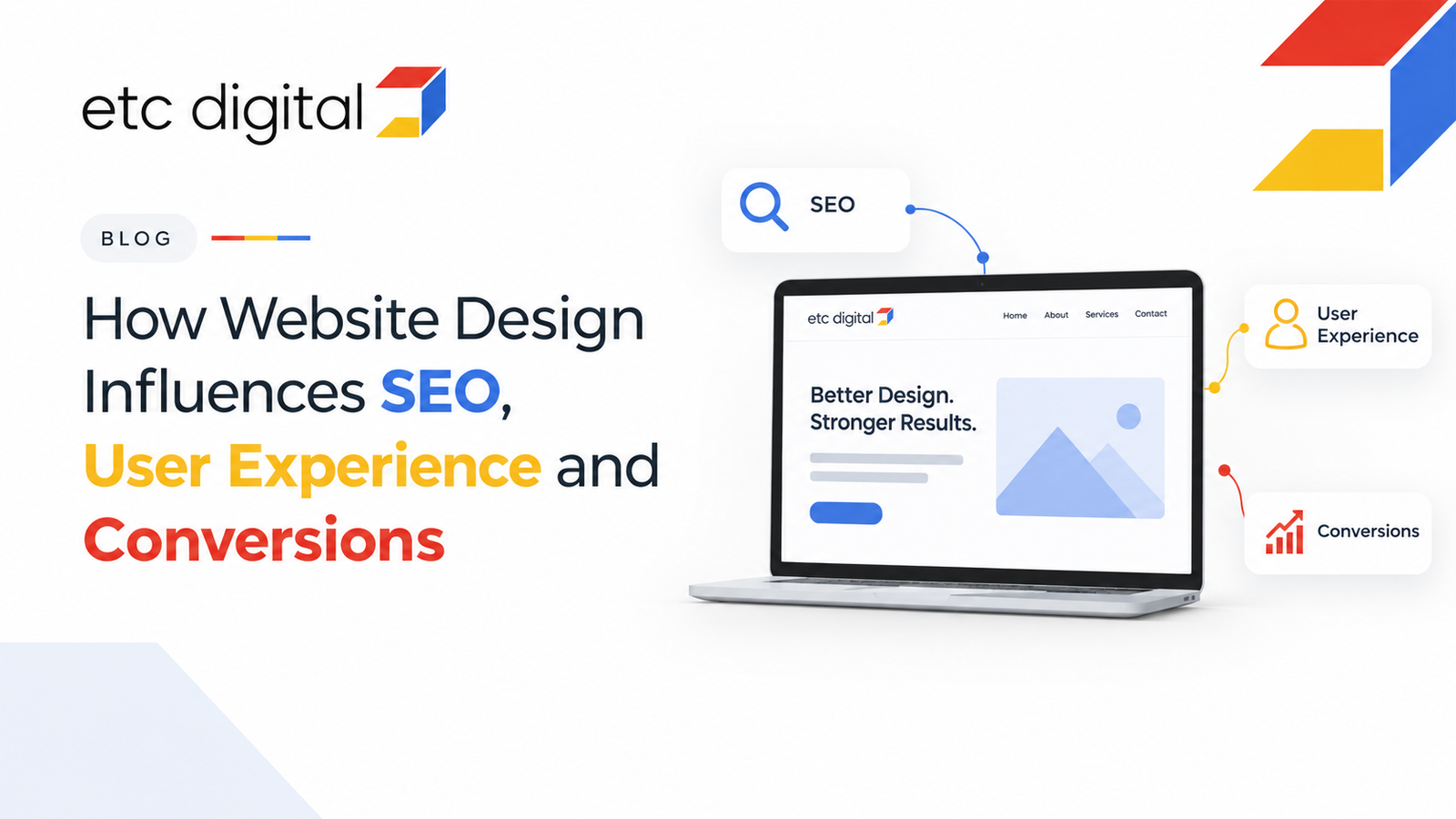
It's when the website is designed with clarity, speed and accessibility that the relationship between the User Experience and SEO becomes more powerful. Pages that are easy to understand are good for search engines and for visitors.
Design Should Support Business Goals
Every business website has a purpose. Some aim to generate enquiries. Others sell products, accept bookings or provide information. The layout should support that purpose without making the experience feel aggressive.
Strong Website Design and SEO combine visibility with usefulness. Ranking brings people to the website, while design determines whether they feel confident enough to stay.
Conclusion
The end result isn't just more traffic. Businesses require visitors who are relevant, know what they offer and act on it. This is where an equilibrium in web design, content and performance can help to enhance engagement and conversion.
A successful Website Design in an SEO strategy makes the website attractive, searchable, fast and easy to use. It provides a digital experience for the visitor and helps the business grow in the long run.
ETC Digital creates performance-driven websites that marry smart design with search and user needs. Build a professional website that can gain trust and convert valuable visits into actual business opportunities.